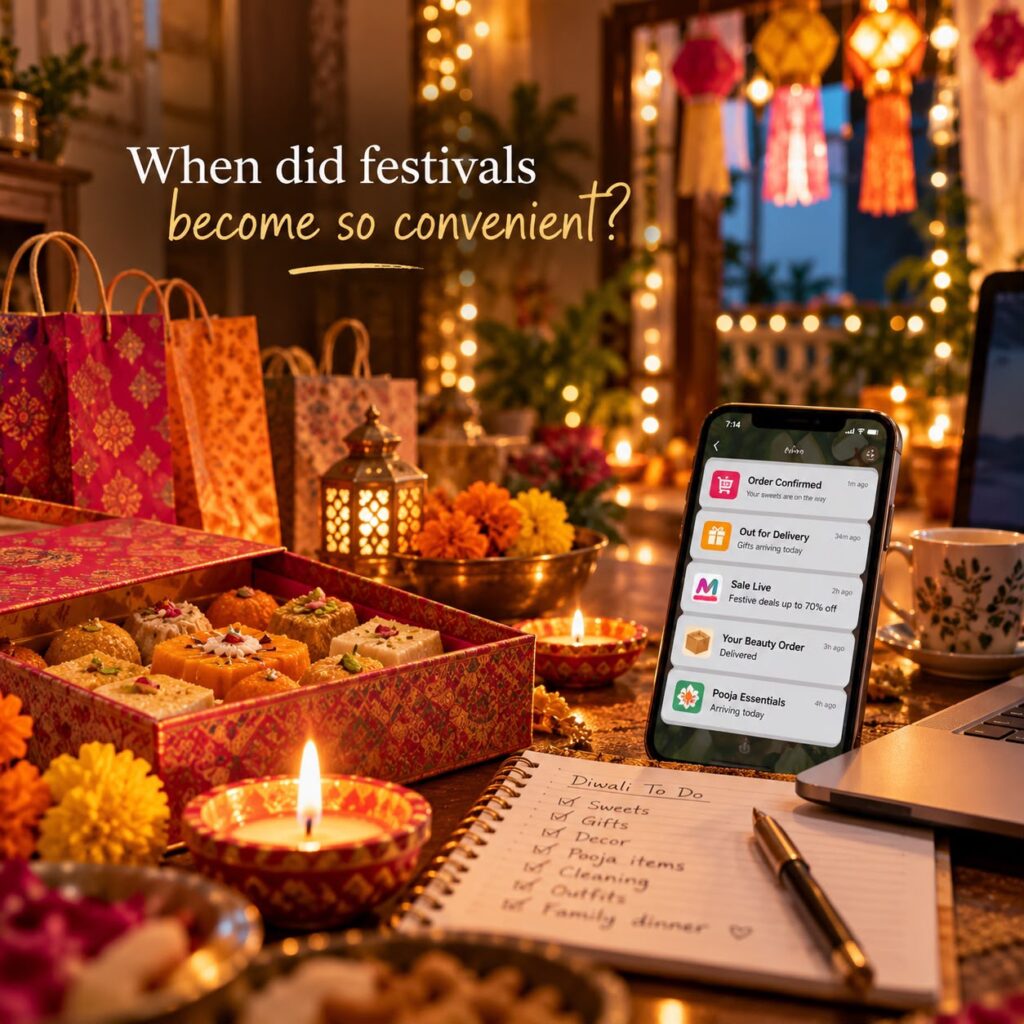
Festivals have always had their own kind of madness.
The cleaning. The shopping. The sweets. The last-minute running around. The house smelling of something being fried. Someone arguing about what to gift whom. Family dropping in. Plans changing. And that lovely feeling that ordinary days had temporarily been suspended.
What I find interesting is how much of that experience has now moved into digital commerce.
Not just shopping. Discovering what to buy. Looking for inspiration. Comparing prices. Ordering sweets. Sending gifts. Booking the cleaning. Finding the outfit. Getting reminded that the sale ends tonight.
The festival now begins much before the festival actually arrives.
And advertising has travelled the same distance.
I remember when festive advertising was something you watched. A Diwali film came on television. You saw the newspaper ads. You noticed the giant hoardings on your way somewhere.
Today, advertising is something that seems to find you.
You search for something once and suddenly Diwali has a very specific suggestion for you.
The interesting part isn’t that this is good or bad. It’s simply fascinating how seamlessly commerce, content, advertising and the festival itself have started blending into each other.
And perhaps I notice it more because of where I sit today.
There was a time when I would spend my festive season thinking about what to buy, what to cook and whom to visit.
Today, somewhere between the mithai box and the dashboard, I find myself thinking about consumer behaviour, festive sentiment, category trends and what the data is telling us about the Indian consumer.
I don’t just experience the festival anymore.
I study it.
And occasionally, when I’m supposed to be thinking about what gift to buy, I catch myself thinking about the festive report instead.
Maybe that’s what growing up in research does to you.
You stop asking, “What are we buying this Diwali?”
and start asking, “What does Diwali tell us about what we’re becoming?”