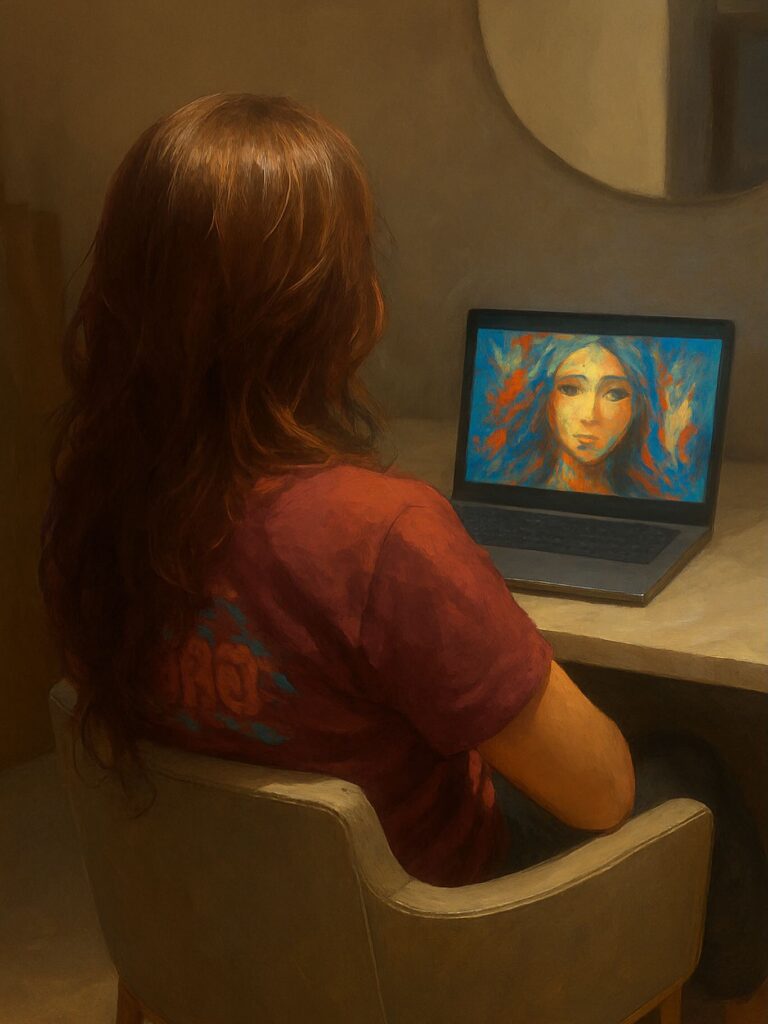
Last weekend, my husband and I sat down to watch the much-talked-about AI-powered Mahabharat on JioHotstar. The visuals were undeniably breathtaking. The palaces shimmered with divine grandeur, and every screen looked as if painted by celestial hands. Yet, something felt missing. The grandeur was there, but the soul wasn’t.
I mentioned to my husband that while the series looked scenic, it lacked emotions. We decided to give it another try maybe a few more episodes would help us connect better.
That’s when our son, who had been quietly listening, said something that stopped us in our tracks: “You shouldn’t watch this. It has made so many people jobless. Artists, costume designers, set designers, and many more.”
His words hit deep. It wasn’t just about an AI series anymore. It was about who pays the price for technological advancement.
AI has brought remarkable efficiency. From automating factories to assisting doctors, to even helping writers, designers and analysts. But when creativity, emotion, and human touch are replaced entirely by algorithms, we lose more than jobs; we lose the essence of the art itself.
An AI can simulate a costume, but it can’t understand the devotion of a designer who stitches emotion into every fabric. It can recreate a set, but it can’t capture the lived wisdom of a craftsman who knows how light and texture evoke divinity.
Technology should assist, not erase. AI can enhance visual storytelling. Help with research, design mood boards, generate prototypes, but the final brushstroke, the emotion, must remain human. Because art, storytelling, and culture are not just outputs they are expressions of lived human experience.
Unrestricted use of AI can cause silent cultural erosion. If we aren’t careful, we might end up in a world where art is flawless but lifeless, a world where efficiency triumphs over empathy.
Perhaps the real question isn’t how far AI can go, but how far it should go. When my son reminded us of the unseen faces behind the screen, it felt like a call to awareness: a reminder that progress should never come at the cost of people.
Beautifully articulated as always!!!!